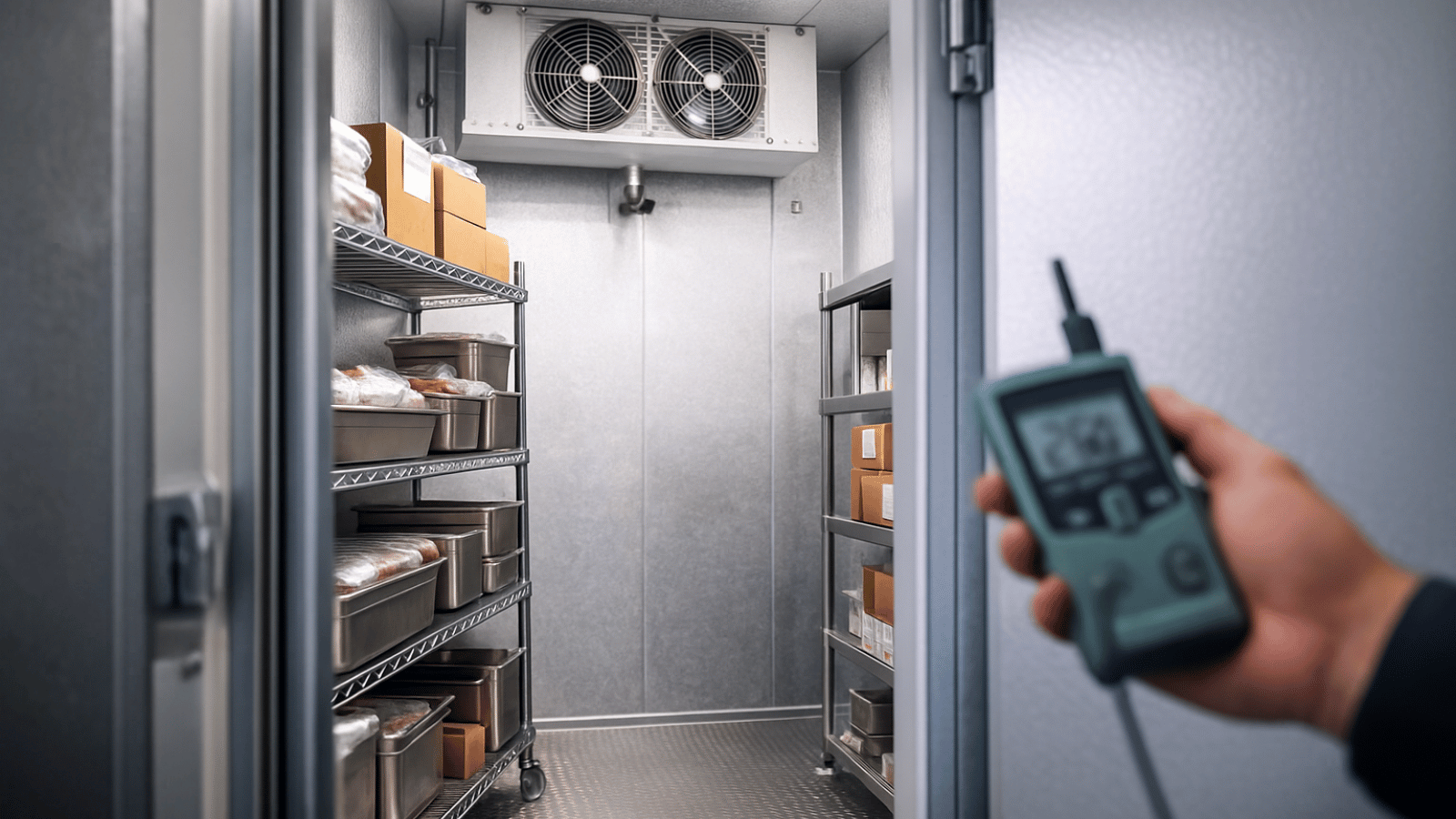
Cold storage isn’t optional for a foodservice operation. When temperatures fluctuate or ice forms on the coils, the impact is noticeable, quickly: increased safety risks, slower workflow, and higher operating costs. Most issues begin as minor changes (such as airflow restrictions, door habits, drain line problems, or inconsistent defrost cycles) and then escalate until the system struggles to function properly.
The most common commercial walk-in failures follow six familiar patterns: cooling loss, temperature fluctuations, coil icing, water leaks, unusual noises, and compressor trouble. Understanding these patterns enables operators to identify problems early and maintain the cooler's optimal operation.
1. The Walk-In Is Not Cooling Properly
Cooling loss is the first red flag for most operators. Incorrect thermostat settings, a tripped breaker, a defrost malfunction, blocked airflow, or a door left open can all cause temperatures to exceed the desired range. These issues may seem routine, but they have ripple effects throughout the system.
What operators can check:
Verify the thermostat setting. Confirm the unit has power and reset the breaker if needed. Look for boxed products blocking the evaporator, and ensure the door is closed during preparation and deliveries.
When to call a technician:
If the cooler stops responding to thermostat adjustments, fails to hold temperature after power is restored, or exhibits signs of a defrost malfunction, it requires professional diagnostics to prevent the issue from spreading.
2. Temperature Fluctuations Inside the Walk-In
Temperature swings often appear before a complete cooling failure. Inadequate defrost cycles, faulty sensors, or frequent door openings can cause the walk-in to enter an unstable pattern. Left untreated, these fluctuations can compromise food safety and indicate more serious mechanical issues.
What operators can check:
Review the defrost cycle settings and confirm they match usage patterns. Avoid leaving the door open during periods of heavy traffic. If a sensor reading looks inaccurate, replacement is usually the fix.
When to call a technician:
If temperatures continue to fluctuate despite corrected settings and consistent door habits, a technician should investigate sensor failures, control issues, or early-stage mechanical problems.
3. Ice Buildup on the Evaporator Coils
Ice on the coils reduces cooling efficiency and can eventually cause the system to stop altogether. Defrost failures, warm air entering through worn gaskets, and clogged drain lines are the usual causes. Ice buildup tends to worsen over time, so taking early action can prevent more extensive damage and costly repairs.
What operators can check:
Inspect door gaskets for tears, gaps, or flattening. Confirm the door seals completely. Check the drain line area for visible blockages. Avoid scraping ice from the coils, since that can damage components.
When to call a technician:
If ice returns soon after clearing airflow issues or gasket problems, the system likely has a failing defrost component or refrigerant-related issue that requires professional servicing.
4. Water Leakage Inside the Walk-In
Water inside the cooler is more than a housekeeping issue. Blocked or damaged drain lines and worn door gaskets often allow moisture to accumulate. Persistent leaks can indicate airflow issues or mechanical failures that impact temperature retention.
What operators can check:
Look for drain line blockages and confirm water flows freely. Examine door gaskets for signs of wear or misalignment. Ongoing leaks after these checks usually need professional attention.
When to call a technician:
Call for service when water returns after drain clearing or gasket replacement, or if moisture begins pooling in multiple areas, which may indicate hidden mechanical or airflow failures.
5. Unusual Noises Coming From the Cooler
A walk-in should run with a steady, low background hum. Grinding, rattling, or squealing sounds indicate problems such as failing fan motors, compressor issues, or loose components. Noise changes offer early warnings that the system is under stress.
What operators can check:
Identify the source of the sound and inspect for loose screws, panels, or shelving that may be touching the fan shroud. If the noise resembles grinding or high-pitch squealing, shut the system down and call a technician. These sounds often indicate damage to the motor or compressor.
When to call a technician:
Any noise that intensifies, repeats, or changes in tone requires immediate attention, especially if it originates from the evaporator or compressor area.
6. Compressor Not Starting or Running Constantly
Compressor issues affect the entire refrigeration cycle and require immediate attention. Dirty condenser coils, low refrigerant levels, and electrical problems can force the compressor to run continuously or fail to start.
What operators can check:
Confirm condenser coils are clean. Watch for control issues or flickering lights that point to electrical trouble.
When to call a technician:
If the compressor short cycles, refuses to start after basic checks, or runs nonstop even with clean coils and proper airflow, a technician needs to assess refrigerant levels, electrical components, or internal compressor damage.
Problems with Walk-ins FAQs
What causes a walk-in cooler to lose temperature?
A walk-in usually loses temperature because of thermostat issues, power interruptions, blocked airflow, door-seal failures, or a defrost malfunction. These minor problems add up quickly. If adjustments don’t stabilize the temperature, a technician should check the controls, defrost system, and electrical components.
Why does ice form on evaporator coils?
Ice buildup occurs when the defrost system isn’t functioning correctly, warm air leaks in through worn gaskets, or the drain line becomes clogged. Ice reduces cooling efficiency and can damage components. If icing returns after basic checks, the system needs professional service.
When should a technician inspect a commercial walk-in cooler?
A technician should inspect the cooler when temperature swings persist, ice continues to form, the compressor struggles, unusual noises recur, or water leaks persist after operator-level fixes. These symptoms typically indicate mechanical or electrical issues that necessitate specialized diagnostic work.
Time to upgrade your walk-in? Customize it from the comfort of your desk to see how Thermo-Kool can help:
