A walk-in cooler lasts longer, holds temperature more consistently, and generates fewer repair bills when it’s both cleaned correctly and built with materials that stand up to real kitchen use. Poor construction magnifies small cleaning mistakes into expensive failures, while a well-built walk-in gives operators and designers a margin of protection over time.
Even with the right cleaning habits, some walk-ins deteriorate faster simply because their panels, seams, and doors can't handle heavy traffic on a daily basis. That’s why understanding cleaning best practices is only half the equation. The other half is making sure the walk-in’s construction supports those habits instead of working against them.
With that foundation set, here’s how proper cleaning, careful daily use, and routine maintenance work together to protect temperature performance and keep long-term costs in check.
Why Proper Walk-In Cleaning Matters for Performance and Durability
A clean walk-in runs colder, safer, and more efficiently because debris, residue, and mold don’t interfere with airflow or insulation. A regular cleaning schedule helps control temperature swings, reduces food safety risks, and minimizes moisture, which can eventually lead to gasket failures and corrosion.
A well-maintained interior also supports the longevity of key components, which slows the pace of repairs and keeps operating costs predictable.
Walk-ins may seem simple, but they aren’t “set it and forget it” equipment. The interior surface materials, seams, and door systems all depend on routine care to maintain their thermal integrity.
When cleaning is neglected or done incorrectly, those areas break down faster, especially in units built with thinner metal, lower-density insulation, or less robust panel connections.
Safe Cleaning Practices for Walk-In Coolers
Effective walk-in cleaning starts with products that sanitize without attacking the cooler’s protective layers. Mild detergents and approved food-contact-safe cleaners remove grime without degrading metal finishes or insulation.
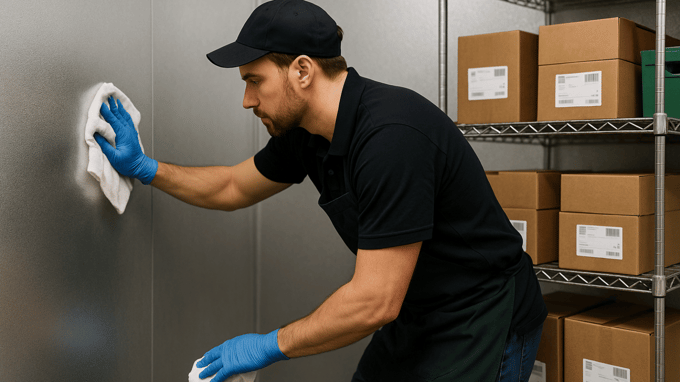
Walls, ceilings, and floors should be cleaned with soft cloths or non-abrasive pads to prevent damage to seams and coatings. Shelving requires routine sanitizing to avoid buildup, which can encourage mold growth.
Frequency matters. Light, consistent interior cleaning supports optimal temperature performance, while periodic deeper cleaning keeps hard-to-reach areas dry and free of microbial growth.
Harsh chemicals, pressure washers, and anything that forces water into seams or panel joints create the kind of long-term damage that even good construction can’t fully offset. When operators avoid those aggressive methods, they extend the usable life of their walk-in and protect the efficiency designers expect from their selected equipment.
Common Causes of Walk-In Damage (and How to Prevent Them)
Many walk-in issues appear as “sudden failures,” but most begin with small, repeated habits. Overpacked shelves restrict airflow, forcing the refrigeration system to run longer than necessary.
That raises energy use and strains components, especially in walk-ins already struggling with weak insulation or inconsistent panel contact. Bumping panels with carts or dollies creates dents that compromise thermal stability.
Door misuse is another major factor. Propping a door open stresses the refrigeration system and introduces moisture that attacks seams and gaskets. Sharp tools scraped across ice or residue can puncture protective layers and expose insulation.
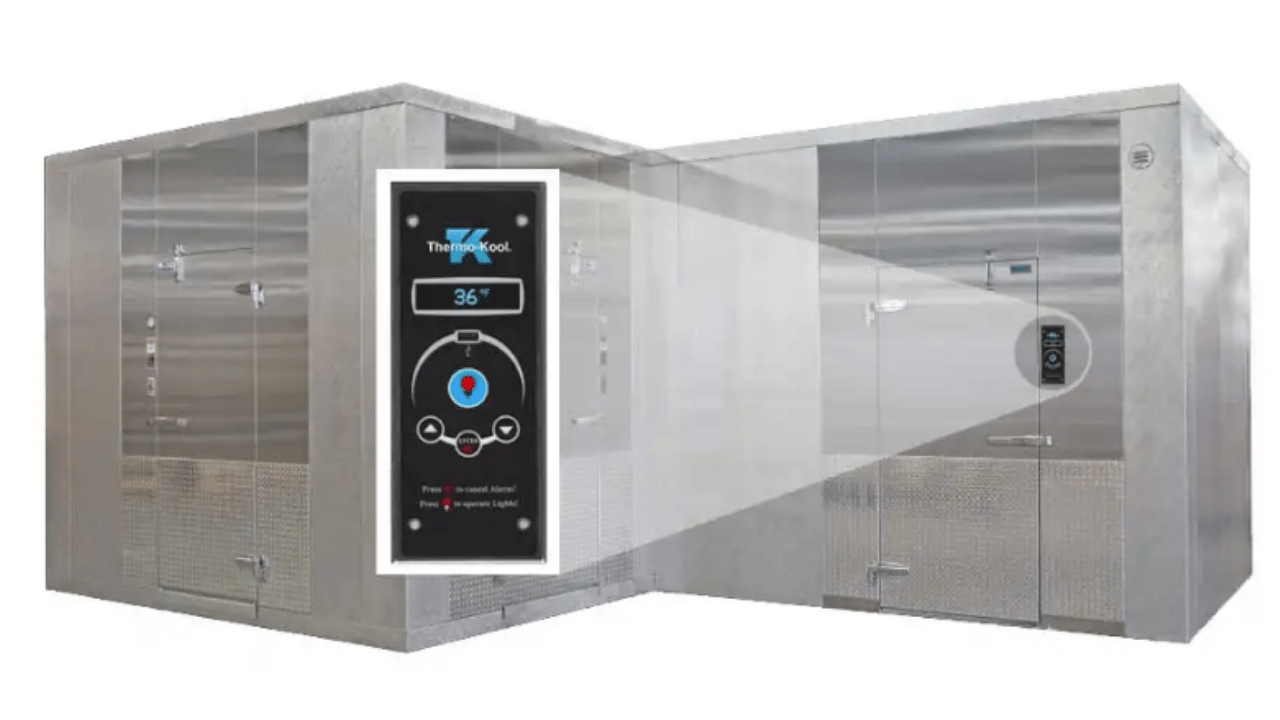
The best solution, in addition to maintenance? Using the Thermo-Kool Walk-in Monitoring System enables operators and managers to detect issues promptly, even when they're offsite. Alerts can be sent via wifi when doors are left open, the temperature inside the walk-in fluctuates, or something just doesn't seem right.
How Regular Maintenance Extends Walk-In Life
Simple, consistent maintenance plays a significant role in preventing damage that stems from daily operation and cleaning. Checking seals and gaskets keeps cold air where it belongs.
Monitoring defrost cycles protects against ice buildup that can stress internal components. Cleaning condenser coils helps refrigeration systems operate efficiently, reducing wear and tear.
Hinges and latches benefit from occasional inspection so doors close tightly. Clear floor drains prevent water accumulation, which can lead to mold and corrosion.
Construction quality significantly influences the effectiveness of this maintenance. Stronger panels resist long-term moisture damage. Well-engineered doors stay aligned longer and maintain stronger seals.
Higher-density insulation maintains a consistent temperature even when traffic is heavy. When a walk-in is built to withstand real-world use, regular maintenance isn’t just a chore—it becomes a low-effort way to delay major repairs for years.
This is where the value difference becomes clear for designers. A lower-cost walk-in may pass inspection on the first day. Still, if its materials can’t withstand routine cleaning and everyday wear, the operator will pay for it later in repairs, downtime, and inefficiency.
High-quality construction reduces these risks and protects the designer’s reputation by ensuring the operation runs smoothly in the long term.
FAQs for Walk-In Cooler Maintenance
How often should a walk-in cooler be cleaned?
Light interior cleaning should be performed regularly, with deeper cleaning scheduled as needed based on volume and traffic. Frequent, gentle cleaning is more effective than occasional heavy scrubbing.
What chemicals are safe for walk-ins?
Mild detergents and food-safe sanitizers protect surfaces without damaging finishes, seams, or insulation. Harsh chemicals can degrade protective layers and shorten the cooler’s lifespan.
Can improper cleaning actually damage a walk-in?
Yes. Abrasive tools, strong chemicals, or pressure washers can compromise seams, panel coatings, and gaskets, leading to temperature loss and costly repairs.
Why do some walk-ins fail faster than others, even when cleaned properly?
Construction quality matters. Thin metal, low-density insulation, a weak gasket design, or poor panel connections deteriorate more quickly under the same cleaning conditions.
How does a well-built walk-in lower long-term repair costs?
Durable panels, strong seams, and reliable doors withstand daily cleaning, heavy traffic, and continuous use. This reduces thermal leaks, gasket replacements, and refrigeration strain, keeping repair costs down over the walk-in’s life.
A Real Life Walk-In Cleaning Horror Story!
If you've made it this far, here's a link to real-life cleaning disaster that caused this walk-in a little trouble. It's a good example of how exercising proper maintenance can deter many problems in the long run.
FULL STORY HERE!
Build the walk-in of your dreams, using the Thermo-Kool 3D Configurator:
