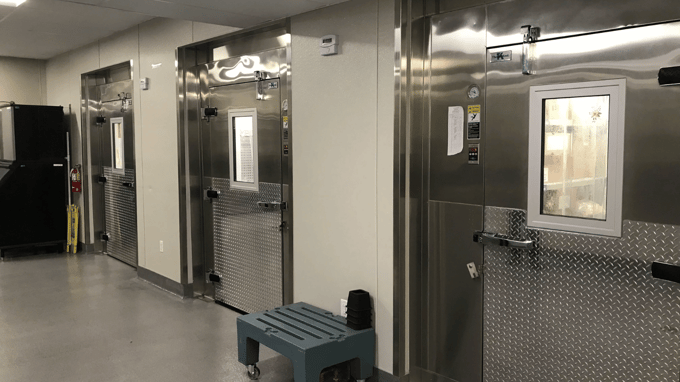
 A properly designed walk-in cooler or freezer does not lock people inside. The real risk comes from misunderstanding how walk-in doors work or from using them incorrectly. For school foodservice teams, that distinction matters. Safety concerns are valid in K-12 environments, but most fears stem from incomplete information rather than from the actual system design.
The Fear: “What If Someone Gets Locked Inside?”
This concern often arises in schools because staff are responsible for both operational safety and student well-being. Walk-ins are enclosed spaces, which makes them easy to misinterpret as a risk.
Much of the fear is driven by perception, not reality. Media scenarios exaggerate rare events, and stories get shared without context. In many cases, teams never receive clear guidance on how walk-ins function. Logically, someone might think that if the door closes while they're inside, they could be trapped. The reality is that it doesn't reflect the construction of modern walk-ins.
The Reality: Why Walk-Ins Don’t “Trap” You
The moment that creates the most concern happens right after the door closes. Someone tries to reopen it and feels resistance, often described as suction.
This is normal. When the door shuts, internal air pressure briefly shifts. That pressure difference can make the door feel tight for a few seconds. Once pressure equalizes, the door opens normally.
Three easy tips to remember when opening a door from inside a walk-in are:
- Pause briefly.
- Try the door again.
- Avoid forcing it.
Built-In Safety Features: Designed to Keep You Safe
Walk-ins are engineered with multiple layers of protection. These systems work together, so anyone inside can exit safely.
Core safety features include:
Internal emergency release latch
-
- Allows anyone inside to open the door at any time
Pressure relief vents (PR vents)
-
- Equalize the pressure so the door opens after closing
Thermo-Kool's Airlock relief valve
-
- Releases pressure instantly with a simple twist
Monitoring systems
-
- Detect entry and lack of exit, then trigger alerts
These features are not optional safeguards; they are fundamental to the safe operation of a walk-in.
Common Mistakes That Actually Create Risk
When safety issues occur, it's rarely about equipment failure. They usually result from how the staff uses the equipment.
Operators sometimes try to work around normal door behavior rather than understand it. Disabling door closers or propping doors open to avoid pressure resistance may seem helpful in the moment, but it introduces larger problems. Temperature control becomes inconsistent, energy use increases, and the system no longer performs as intended.
Other risks come from blocking doors with inventory or interfering with door hardware. These actions disrupt systems designed to function safely.
Walk-In Safety in Schools: What to Look for Before You Buy
For schools, safety must be considered before installation. Certain features must be built into the unit during manufacturing and cannot be added later without compromising performance.
This makes the specification process a key decision point. A well-designed walk-in should include reliable pressure management, a dependable internal release mechanism, and construction that supports consistent operation without adjustments or workarounds.
Additional safeguards, such as instant pressure-release options and monitoring systems, add another layer of control in school environments where staff may work alone or manage multiple responsibilities simultaneously. Clear safety signage reinforces proper use and sets expectations for daily operation. Addressing safety during specification reduces operational issues later.
The Bottom Line: Don’t Panic. Design Matters
Walk-in safety starts with design and construction. Thermo-Kool integrates emergency release hardware, pressure management, and monitoring capabilities into the unit itself. That approach supports safe operation without workarounds and gives school staff confidence in day-to-day use.
FAQs About Walk-In Cooler and Freezer Safety
Can a modern walk-in freezer door lock someone inside?
No. Walk-ins include an internal release mechanism that allows exit from the inside at all times.
Why does the door feel stuck sometimes?
A temporary pressure difference occurs after the door closes. It resolves within seconds.
What should someone do if the door does not open right away?
Wait briefly and try again. Do not force the door.
Are extra safety features necessary for schools?
Yes. Added systems, such as pressure-release valves and monitoring, provide extra protection, especially when staff work alone.
Start designing a safe walk-in for your school's cafeteria, right from your own desk:
